Saturday, March 30, 2013

Rolling On to a Beautiful Island

We live on the little bayou off to the right (arrow). Gulf of Mexico is at left.
We have pulled in the wings of our motorhome, hung our bikes off the back, strapped our canoe atop the Honda, and moved like a gopher turtle about 120 miles to a new park.

We have now taken up residence at what is known as a "day park" on the Gulf of Mexico. It's called Lover's Key State Park. No campers at this one...just folks who come in to enjoy the sand and shells along the miles of beaches. Our motorhome shares a mini campground with five other couples who are volunteers at this park. One couple, the youngest among us, comes from South Kent, Connecticut. Debbie Kaprielian, an accountant, and her husband, Ken, just celebrated their 25th wedding anniversary and decided to take to the road full-time.

Our immediate neighbors, Bud and Marsha, come from Kitty Hawk, North Carolina, where Orville and Wilbur Wright managed to get their plane to fly 110 years ago. Bud is a big fisherman and seems to be up at dawn, casting out his shrimp lure to catch catfish.

We are here for only a month, though this seems to be a special place and we will work hard at figuring out a way to come back and spend more time in the future.

Our rig is parked alongside a bayou, off the beaten path. There are wonderful canoe trails on the bay-side of the park. Our volunteer jobs include opening and closing the park, driving the tram that transports visitors from the parking lot down to the beaches, and, of course, the joy of seeing that the bathrooms are maintained and cleaned. Doing all these chores results in our having this first-class site, with 50-amp electricity, full sewer and water hookups, plus access to a washer and dryer. Life ain't bad!

We begin work on April 1 but arrived here on March 28. So we've had a few days to get settled in and figure out the area. We actually are just about 20 miles south of Koreshan State Historic Site where we spent a wonderful two months at the end of last year.

We're glad to have you all come along vicariously. And stay tuned for updates as we uncover new treasures in the days ahead.


Thursday, February 14, 2013

Livin' Small

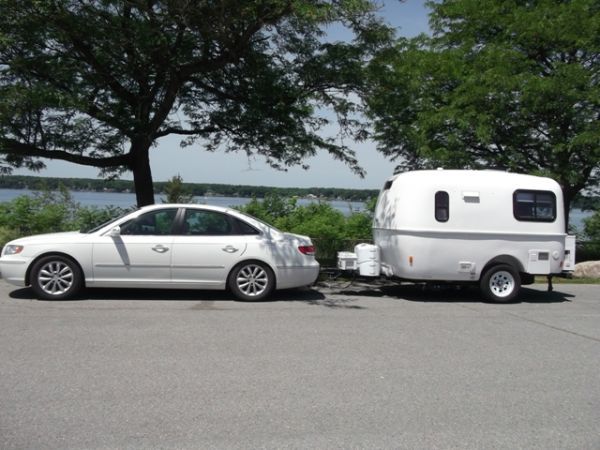
This little bubble is a Casita
Barb sat across the table from me at the Rec Hall. We were sharing freshly made biscuits and homemade jams. Tasty. Barb and her husband, Hony, were at the park for a rally of Scamp and Casita owners. These are tiny little trailers, built in Minnesota and Texas. They are between 13 and 16 feet long, and made of fiberglass. Barb is explaining why she likes the simplicity of her Scamp.

“I don’t have air conditioning in it,” she says proudly. If I want air conditioning, I step outside. I don’t have an awning. If I need shade, I step beneath a tree. I don’t have a TV. It has a bed and a little dinette. It’s everything we need.”

There are 61 Casitas and Scamps in the campground this week. They have journeyed here from all over the U.S. The trailers were made by two brothers who had a falling out and went their separate ways. One makes Scamps. The other makes Casitas. They are the tiniest little bubbles. And their owners are fanatical about their rigs. These things are not cheap. New ones sell for $26,500. But you can still buy a 1976 Casita for $3,200. 

Sunday, January 13, 2013

Oops! I Just Stepped into Paradise

Knees of the cypress trees create a little village where Hobbits could live.

The five deer stood in the clearing, shafts of sun dappling them while fog wreathed through the trees. The deer watched me closely – but seemed unconcerned. I stood on the pathway and spoke quietly to them. We just quietly enjoyed each other – the human watching these beautiful creatures. The beautiful creatures, knowing they were in a protected place, knew no fear and chewed on the grass and leaves.
We were in a perfect place.

Later, as I drove the loop road of the park, I came upon two more deer. They were walking toward me as I drove the Mule, a four-wheel drive vehicle of uncertain quality with a hiccupping transmission. These deer were more fearful because they were in a trapped situation, walking the fence line. They did an about face and leaped along the sandy road to escape the vehicle.

I stopped by the Cypress Trail. My job is to walk the trail, carrying a gas-powered blower so I can blow the falling leaves off the wooden boardwalk. After blowing for a few minutes, the leaves disappear and I am left in the perfect peace of a cypress swamp.

The knees of the cypress trees rise up from the tea-tinted water. They provide stability to the trunks of the massive cypress as well as providing access to air for the root system. The place looks like something you might imagine from the Hobbit. The conical knees could be little houses. Spiders glitter like jewels in the rising sun. Their webs capture the moist air and it coats the gossamer with glittering perfection.

A ring-tailed hawk swoops down from the sky and rests on the branch of an elm tree above my head. He is interested in the human but doesn't linger.

As I wander the boardwalk, my eye is attracted to the little plaques that have been placed along the handrails. They all remember someone who has passed who had walked this trail. I am cocooned in the love of people who have gone before me. I initially photograph the plaques so I'll be able to remember the words that touch me. But, when I get back to the rig, I think the plaques deserve to stand on their own. So I have placed them to the left of this blog. Enjoy!

Day two on the trail: I was in a Kubota, a noisy but powerful machine that works great on the sugar sand of the back country at Highlands Hammock State Park. I was running the canal on the southern edge of the roosting area for the property. I’d just arrived at the vultures’ roosting area. They congregate together along the road and in the trees – between 350 and 500 of them. I have no idea what draws them to this particular part of the park. As I creep along, they flutter down from their roosts to waddle along the road or to settle on the wooden bridge I have to cross. These birds look awfully healthy. They must have lots of carrion to keep them happy.

 But wait. Out of the canal comes a sleek adult otter. He climbs the bank right in front of me, looks over his shoulder at me in the Kubota, and then quickly waddle along the sandy path. The vultures on the path jump out of his way while others drop down from the pine trees to land beside the otter. But he is having nothing to do with these birds. He slithers down the bank and submerges back into the water.

And so it goes. Not an hour goes by without something special coming into my view. There's a smile on my lips and I whistle as I do my work. Life is good.
This cypress knee has become a bowl that captures moisture in the swamp.

Thursday, January 3, 2013

A Hidden Treasure


Momma alligator lies in the sun, while the babies wriggle around her at Highlands Hammock State Park.


Oh, what a treasure we have found at Highlands Hammock State Park, in the center of the state. It is old – by Florida standards – having been created back in the early 1930s by the Civilian Conservation Corps, that outstanding program created during the Great Depression by Franklin Roosevelt.

The program put more than three million young men to work, paying them $1 a day. Twenty five of those dollars were sent home each month to the family, while the worker kept $5. He got three meals a day, classes in the evening which helped him learn to read and write. The program resulted in bridges being built, along with roads and hundreds of parks throughout the land. 

Even though the government had access to heavy building machinery, very little of it was used so that more men could be employed. It brought back a memory of a town I visited in Namibia where the workers were complaining the government had brought in a trench digging machine to make a work project go quicker. The men of the town complained that the machine took jobs away from them. And jobs meant money - precious in a population where the unemployment level is 56 per cent. It was a brilliant program that lived on until World War II when the men transferred out to become our greatest generation.
A statue honoring the young men of the CCC stands outside the museum at Highlands Hammock State park (where Jo will volunteer as a docent).

This park is a jewel. Not only are there camping facilities, there are large areas tucked away in the back of the park with wandering trails that take you through cypress swamps, alongside canals that are teeming with alligators and wading  birds.

Jo and I don’t begin our duties for another few days so we have taken advantage of the free perks, traveling the park on the trolley with a veteran volunteer who knows much about the flora and fauna. Kevin took us along a dirt track where the general public is not allowed to travel on its own. He stopped to point out the lurking gators, dozens of them, but urged us to keep out eyes peeled for more exotic creatures. 

He explained the huge value of each of the creatures but made a point of highlighting the gopher tortoise with which we've gotten up close and personal at numerous parks.
The gopher tortoise is a very important part of the local ecology.  As in any food web, if you start taking certain flora or fauna out of the equation, then you can adversely affect the survival of that ecosystem.  

The gopher tortoise is especially important because the burrows, which are dug by the tortoises, also provide homes for other animals, such as indigo snakes, gopher frogs, mice, foxes, skunks, opossums, rabbits, quail, armadillos, burrowing owls, snakes, lizards, frogs, toads and other invertebrates. Kevin said gopher tortoise burrows are home to about 250 species of animals at one time or another. They are the key to survival of the different species in time of forest burns where a scorched earth above ground requires safe havens below the earth.  Since the burrows are used by so many species, it does not take a rocket scientist to see that removing the tortoises from the local habitat would leave many animals without homes. 

We spotted a wood stork and heaps of red-bellied turtles clambering onto logs to sun themselves. But the most interesting thing he pointed out was a wonderful little aquatic plant, the floating bladderwort. This little thing has an umbrella-like series of legs with bladders on their ends. The plant floats on the still waters and eats the larvae of mosquitoes. It is carnivorous and does a world of good by cutting down on the pesky mosquitoes.

We met up with another campground host couple this morning. They travel south each year from Indianapolis, Indiana, to spend three months in the park. Bill and June walked with us over to the maintenance yard where they checked out an electric cart and gave us a tour of some other areas of the park while telling us about the facilities and the people who make it work so well.

They took us to the Cypress Swamp Trail, a boardwalk that took us over the watery swamp with thousands of cypress knees that rise two or three feet above the water. These are part of the root system of the cypress trees, allowing the tree to breathe in the swamp. Part of my duties require me to head into the swamp every third week, along with all of the other trails in the park, to check that they are clean and passable. Not only will I get great exercise, but I’ll be able to carry my camera shortly after dawn breaks to capture the primitive majesty of the place.

Wednesday, November 28, 2012

Up the river

Passing the bamboo forest, beyond the palm trees, on the Estero River.


Perfect peacefulness. We are on the Estero River, paddling upstream against an almost non-existent current. To our right is the Koreshan State Historic Site where we live and volunteer. The bamboo forest is creaking in the wind that is 199 feet up but not at the river level. To the left is a wild tangle of trees, ferns, strangulating vines. There are fish leaping in the river….but very little bird life.

Bamboo can grow at about 2 inches per hour. On the slower side, most estimates place bamboo at about 24 inches in a single day. The record for the fastest growth is 47.6 inches in a 24-hour period. Additionally, there are records of large tropical bamboo plants growing 100 feet in the span of merely three months!


We reached State Road 41, known as the Tamiami Trail because it links Tampa with Miami. It is a busy four-lane highway and the crunch of tires presses in on us as we paddle under the bridge. On the other side, we lose ourselves in a river that is even quieter. There’s a tiny one-person suspension bridge across the river, with electric cables hanging under the walkway. I surely wouldn’t want to test this little bridge. Off to our right now is more Koreshan Unity acreage. This cult surely was industrious and acquired hundreds of acres. This 65-acre parcel is now for sale.

We decided to turn back as the river narrowed and got more and more shallow.
We passed back under the highway and came upon a mobile home park that lies along the river. They are putting in about 20 boat slips so this river is going to get appreciably busier in the months ahead.
It’s still a pretty special place – a haven in the midst of this megalopolis, this sprawling parking lot of big box stores, outlet malls peopled by hundreds of Brits who seem to fly over just for the shopping, and a couple of million Floridians and snowbirds who flood in at this time of the year from the cold north.

Monday, November 5, 2012

A Different World View


 This device demonstrates how the Earth surrounds the universe.
 This is the device the Koreshans used to demonstrates how the Earth is concave.

The Art Hall is the site for concerts, plays and communal events.

We have arrived at the Koreshan State Historic Site. And I have to tell you a little about this strange site to give you the flavor of the place.

It was founded in the late 1890s by a Dr. Cyrus Teed from Chicago. Cyrus changed his name to the Persian/Hebrew name Koresh (it supposedly means Cyrus).  He came up with the strange notion that we folks on Earth live on the inside of the planet and, when we look at the stars, we are actually looking into the center of the Earth. He believed the Earth was concave so we surrounded the universe.

He managed to get 250 hard-working people to come down to Estero, Florida, and set up a commune here. He was a big proponent of women in leadership roles and seven women lived in the Planetary Chamber and ran the commune. They, as well as the other top people in the group, committed to celibacy. But you could join the Koreshans and not be celibate. If you had kids, you would turn them over to the commune. Generally, the men lived in one big building, the women in another. The kids stayed in a separate dormitory and were looked after by a group of women.

These were not hippies. They were hard-working folks who were inventive and incredibly industrious. They set up a bakery that produced 650 loaves of yeast bread each day. This was a stopping off place for people trying to travel between Fort Myers and Naples to the south. They created a steam-driven laundry that had a spin cycle that would blow any Whirlpool or Kenmore out of the water today. They created their own electric generating plant as well as a machine shop that ran off a series of pulleys and belts. All of that remains in working condition today.

But celibacy will always do you in. And the group had a hard time sustaining their numbers and they dwindled to almost nothing by the 1950s.

Jo is a docent at the Planetary Chamber, and the Art Hall. The hall has a spectacular Steinway grand piano, built in 1885. It is considered unique in the world and is beyond price. I must admit to sneaking on stage when we were closing the hall on Sunday and tinkling away on the Steinway. Nice sound!

Jo was demonstrating spinning at the art hall, while keeping an eye on all the folks who wandered through the hall and trying to answer their questions.

There’s an interesting rig that was created by the Koreshans to demonstrate (and “prove”) their theory that the world is concave. They supposedly set up the device on the beach and then precisely measured and moved it repeatedly for some miles. As a result of those measurements, they said, it was conclusively proved that the earth rose up to prove its concavity. Well, sort of! People in later years took the device, along with a laser level, back to the beach and repeated the measurements. What they discovered, of course, was there was a tiny aberration in the device and this amplified the inaccurate reading as the miles went by.

The historic site has all manner of exotic trees and shrubs. There are three Sausage trees from Africa, an Orchid tree from India, Crepe Myrtle from Asia, Night Blooming Cereus from South America, Red Silk Cotton tree from the East Indies and southern Asia.

There’s even a Women’s Tongue tree with long pods that rattle in the breeze. And there’s a Soapberry tree, the fruits of which make abundant lather when crushed in water and have been used as a laundry soap substitute in Mexico and Central America.

One of the last Koreshan women to live here was named Vesta Newcomb. Before she died, Neil Armstrong and Buzz Aldrin landed on the moon. That signal act brought home to Vesta that the Koreshans had gotten it all wrong. She acknowledged they were wrong about the earth surrounding the universe.

Cyrus, by the way, designed what he called The New Jerusalem for Estero. It was a city that could accommodate up to 10 million people. Those folks never came to Estero and it now is a lovely community that lies about 14 miles south of Fort Myers in Florida. The Koreshans donated their land to the State of Florida about 40 years ago and the park now is run as an historic site.

We have a delightful campground, with 60 sites. My job is to keep the place clean, answer visitors’ questions. It’s a great way to meet folks and we are having a ball. We are here for two months.

Saturday, October 27, 2012

Blood and Guts

A warning for those who left the straight-and-narrow.

Halloween came to the park – with a bang. Honeymoon Island pulls the stops out every year with a huge Halloween spectacular. Our assignment was to cook hamburgers and hotdogs for the 300 volunteers involved in producing this extravaganza.

It also involved working during the week on the setup of the horror walk where we installed an outhouse, a funeral parlor, a Donner Pass stopover with appropriate cannibalism props (legs hanging out of the cook pot) and a saloon with a headless piano player.

All of this took massive planning by the rangers. It’s a major revenue producer for the park and all hands were on deck. Karen, our supervising ranger, was in charge of the volunteers. Karen reminds me of the ringmaster of a circus… or maybe one of those plate-spinners who keeps ever-increasing numbers of plates aloft. She pulled this one off with her usual good nature.

In addition to the horror trail we helped set up, there also was a haunted house, make from the picnic pavilion. Youngsters from the local high school appeared at 6 on Friday and Saturday nights with their ghoulish makeup, along with orange and yellow contact lenses, bloody clothing and nasty scars and gouges.

Jo and I cooked our burgers for the volunteers just outside the haunted house and we were subjected to the endless screams of the visitors as they made their way through the black corridors with the waiting un-dead.

Elsewhere in the picnic area, there were booths for face painting, fortune-telling, dunking, as well as other games. Thousands came each night to the park as the sun set and a waxing moon rose over the palm trees.