Tuesday, May 28, 2013

Ripples Long After the Rock Hits the Pond

Hla Hla with me at graduation.

Two events this week brought home to me that the rock you drop in the pond continues to make ripples long after it has disappeared.

My two rocks were dropped into the big pond at opposite ends of the world: Namibia and Burma. One was dropped in 2003, the other in 2006.

While Jo and I lived in Phnom Penh, Cambodia, back in 2003-4, I ran a training institute for working journalists from Vietnam, Laos, Burma and Cambodia.  Because I was not permitted to enter Burma by the generals who run that country, I had to rely on the U.S. embassy in Yangon (Rangoon) to vet the candidates for the courses. I was only able to telephone the embassy and discuss their choices. 

One young woman, named Hla Hla Htay, was chosen in 2003. She worked as a freelance reporter in the capital. She was very young, 23, but the embassy contact said she had something special in her spirit and in her willingness to sacrifice for her chosen profession. I chose her for the intensive four-month course in Cambodia and she made her way, surreptitiously across Burma’s borders to Thailand and then to Cambodia because the government of Burma was utterly opposed to sending citizens abroad for training.

Hla Hla distinguished herself every day. She was the quietest, most reserved and demure young woman. She loved Daw Aung Sang Sui Ki, Burma’s democracy leader who was being held under house arrest at that time. What I noticed about Hla Hla was she was tiny, perhaps weighing 85 pounds. But she had the strength and grip of a bulldog. When I assigned her a story, she would dig in and dig in, not letting up until she got to the bottom of the story. She’d work day and night, questioning in her polite, quiet way. But she never, ever, gave up. 

So it was with delight that I received a phone call from the head of Agence France Presse’s bureau in Bangkok, Thailand. She wanted to know if I could recommend any Burmese reporter who had come through our Southeast Asia Media Institute who might be a candidate to head their bureau in Yangon.
I had no hesitation in recommending Hla Hla but I also knew she would have a hard time selling herself because she was so shy.

The AFP bureau chief said she would meet Hla Hla at the Bangkok airport to interview her on her way home.

I told Hla Hla of this wonderful opportunity and she was excited but very nervous. I spent several mornings before or after her classes teaching her the art of the job interview. When she looked down while answering  questions I would stop her and require her to make eye contact. When she was self-effacing and down-played her abilities and qualifications, I helped her rework her responses so she did a better job of “selling” herself.

She graduated and headed homeward. I knew I would have a hard time keeping track of her fate because Burma does not permit most of its people to have access to the Internet. They cannot have an email address.

I did hear from her, though. She emailed me somehow, telling me the interview went well and AFP offered her a three-month trial. The news agency increased her pay from $50 a month as a freelancer to $1,000 a month during the trial period. She was “in”.

Then Hla Hla went off the radar. I kept trying to reach her but my emails bounced back from that closed country. I even tried to reach her via another Burmese who had managed to make it to our institute but who turned out to be a spy for the government. This woman had an email address. She also had a cellphone which, I was told, was a dead giveaway she worked for the government. Regular citizen of Burma cannot afford a cellphone which is sold for $5,000 U.S. in that country.
Nothing happened, however.

I Googled Hla Hla by name and found dozens of stories she had written for AFP. I also found dozens of picture she had shot and had transmitted out of the country. She’d made it through her trial and was entrenched as a correspondent. Now, it is with the greatest pleasure, I get to read her stories on the Internet. I still am unable to make contact with her. But it feels so good to watch her progress on a weekly basis via AFP.

Here are the latest headlines
Myanmar's powerful Wa rebels seek a state of their own
* Suu Kyi's party sweeps landmark Myanmar polls
* Daily papers transform Myanmar news stands

Ripple No. 2 occurred yesterday when the ripples reached me from Namibia in Africa.

Christof, partying with Namibian editor Gwen
Lister.
The news editor of The Namibian, a young man named Christof Maletsky, wrote me to say he needed my help. I had worked with Christof on three occasions – in 2001, 2003 and 2006-7. He is a member of the Damara tribal people in Namibia and, as a result, has to work harder than those who are in the dominant tribe, Owambos, since the latter hold most of the political power in the country. 

Christof wrote me because he had lost a series of emails I had written each day to the journalists at The Namibian while I worked there. These emails discussed my beliefs about journalism. They analyzed that day’s newspaper, seeking to praise and criticize individual stories we had worked on. They talked about the fundamental need for curiosity in all journalists.

When I left Namibia in 2007, I presented a print-out of my emails to the newspaper as a memento. In addition, I had made the emails available as an electronic file. Christof wrote to say he had been using these emails for the past six years in my absence but the newspaper’s computers had crashed and the file had disappeared. Did I, by chance of a miracle, still have a copy of those files? He said he still uses these emails with the new reporters who start work at the paper.
Yes, I did. I found them on my laptop and sent the whole file to Christof in a couple of minutes.


Then I sat in my motor home and meditated about how we sometimes make an impact and never really know until later that we have changed someone’s life. Here were two instances where the evidence was pretty clear.

Friday, April 19, 2013

Paddling Among Manatees


This super-friendly manatee came alongside our canoe and swam upside down alongside a neighboring kayak.
There is an antidote to the awfulness that's running amok in our world at this time: canoeing among the manatees in Lover's Key State Park. Jo and I joined all our other resident volunteers (there are five other couples here), plus another handful of visitors who were on a kayaking adventure this morning.

The brisk wind kept temperatures in the low 70s as we paddled along in our Kevlar canoe. The expedition was led by Justin, a young park ranger. He backed up his kayak to the red mangroves along the bank and pointed out an immature white heron that was poking his beak into the water in hopes of spearing a small fish. As Justin spoke, an enormous manatee rolled over and nudged his kayak as if to say, "don't forget that I'm part of the display, buddy!"

The manatee's closest relative is the African elephant. They have a huge set of molars that are used exclusively to munch on grasses and leaves. We often see them rise out of the water at our campsite to nibble, oh-so-gently, on the red mangroves leaves that brush the water.

This fellow then set about gently nuzzling the kayaks that were close to him. He allowed us to get close enough to stroke him. His leathery skin is slimy with mossy growth along his back.

He left us and slowly paddled over to another set of kayakers who rounded the bend.

We canoed around Black Island, visiting with cormorants, blue herons and outrageously-plumed snowy egrets who were hunted close to extinction more than 100 years ago for their extraordinary plumage. The feathers were used in ladies' hats as a fashion statement but, somehow, good sense prevailed and the birds have been saved so we can admire them in their wild state.

We just arranged to return to this delightful piece of heaven on earth in mid-October for six weeks. We find such an environment to be good for our souls.

Saturday, March 30, 2013

Rolling On to a Beautiful Island

We live on the little bayou off to the right (arrow). Gulf of Mexico is at left.
We have pulled in the wings of our motorhome, hung our bikes off the back, strapped our canoe atop the Honda, and moved like a gopher turtle about 120 miles to a new park.

We have now taken up residence at what is known as a "day park" on the Gulf of Mexico. It's called Lover's Key State Park. No campers at this one...just folks who come in to enjoy the sand and shells along the miles of beaches. Our motorhome shares a mini campground with five other couples who are volunteers at this park. One couple, the youngest among us, comes from South Kent, Connecticut. Debbie Kaprielian, an accountant, and her husband, Ken, just celebrated their 25th wedding anniversary and decided to take to the road full-time.

Our immediate neighbors, Bud and Marsha, come from Kitty Hawk, North Carolina, where Orville and Wilbur Wright managed to get their plane to fly 110 years ago. Bud is a big fisherman and seems to be up at dawn, casting out his shrimp lure to catch catfish.

We are here for only a month, though this seems to be a special place and we will work hard at figuring out a way to come back and spend more time in the future.

Our rig is parked alongside a bayou, off the beaten path. There are wonderful canoe trails on the bay-side of the park. Our volunteer jobs include opening and closing the park, driving the tram that transports visitors from the parking lot down to the beaches, and, of course, the joy of seeing that the bathrooms are maintained and cleaned. Doing all these chores results in our having this first-class site, with 50-amp electricity, full sewer and water hookups, plus access to a washer and dryer. Life ain't bad!

We begin work on April 1 but arrived here on March 28. So we've had a few days to get settled in and figure out the area. We actually are just about 20 miles south of Koreshan State Historic Site where we spent a wonderful two months at the end of last year.

We're glad to have you all come along vicariously. And stay tuned for updates as we uncover new treasures in the days ahead.


Thursday, February 14, 2013

Livin' Small

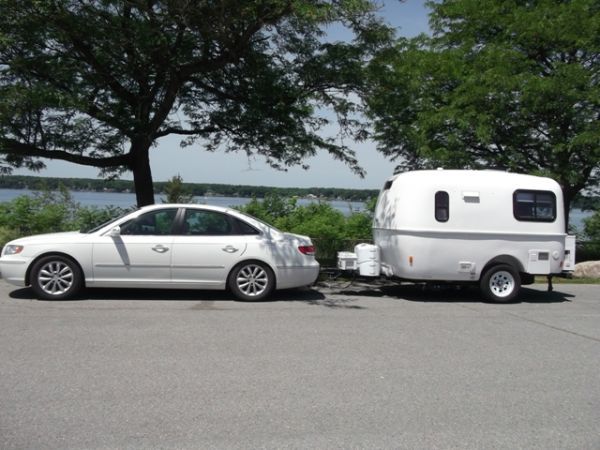
This little bubble is a Casita
Barb sat across the table from me at the Rec Hall. We were sharing freshly made biscuits and homemade jams. Tasty. Barb and her husband, Hony, were at the park for a rally of Scamp and Casita owners. These are tiny little trailers, built in Minnesota and Texas. They are between 13 and 16 feet long, and made of fiberglass. Barb is explaining why she likes the simplicity of her Scamp.

“I don’t have air conditioning in it,” she says proudly. If I want air conditioning, I step outside. I don’t have an awning. If I need shade, I step beneath a tree. I don’t have a TV. It has a bed and a little dinette. It’s everything we need.”

There are 61 Casitas and Scamps in the campground this week. They have journeyed here from all over the U.S. The trailers were made by two brothers who had a falling out and went their separate ways. One makes Scamps. The other makes Casitas. They are the tiniest little bubbles. And their owners are fanatical about their rigs. These things are not cheap. New ones sell for $26,500. But you can still buy a 1976 Casita for $3,200. 

Sunday, January 13, 2013

Oops! I Just Stepped into Paradise

Knees of the cypress trees create a little village where Hobbits could live.

The five deer stood in the clearing, shafts of sun dappling them while fog wreathed through the trees. The deer watched me closely – but seemed unconcerned. I stood on the pathway and spoke quietly to them. We just quietly enjoyed each other – the human watching these beautiful creatures. The beautiful creatures, knowing they were in a protected place, knew no fear and chewed on the grass and leaves.
We were in a perfect place.

Later, as I drove the loop road of the park, I came upon two more deer. They were walking toward me as I drove the Mule, a four-wheel drive vehicle of uncertain quality with a hiccupping transmission. These deer were more fearful because they were in a trapped situation, walking the fence line. They did an about face and leaped along the sandy road to escape the vehicle.

I stopped by the Cypress Trail. My job is to walk the trail, carrying a gas-powered blower so I can blow the falling leaves off the wooden boardwalk. After blowing for a few minutes, the leaves disappear and I am left in the perfect peace of a cypress swamp.

The knees of the cypress trees rise up from the tea-tinted water. They provide stability to the trunks of the massive cypress as well as providing access to air for the root system. The place looks like something you might imagine from the Hobbit. The conical knees could be little houses. Spiders glitter like jewels in the rising sun. Their webs capture the moist air and it coats the gossamer with glittering perfection.

A ring-tailed hawk swoops down from the sky and rests on the branch of an elm tree above my head. He is interested in the human but doesn't linger.

As I wander the boardwalk, my eye is attracted to the little plaques that have been placed along the handrails. They all remember someone who has passed who had walked this trail. I am cocooned in the love of people who have gone before me. I initially photograph the plaques so I'll be able to remember the words that touch me. But, when I get back to the rig, I think the plaques deserve to stand on their own. So I have placed them to the left of this blog. Enjoy!

Day two on the trail: I was in a Kubota, a noisy but powerful machine that works great on the sugar sand of the back country at Highlands Hammock State Park. I was running the canal on the southern edge of the roosting area for the property. I’d just arrived at the vultures’ roosting area. They congregate together along the road and in the trees – between 350 and 500 of them. I have no idea what draws them to this particular part of the park. As I creep along, they flutter down from their roosts to waddle along the road or to settle on the wooden bridge I have to cross. These birds look awfully healthy. They must have lots of carrion to keep them happy.

 But wait. Out of the canal comes a sleek adult otter. He climbs the bank right in front of me, looks over his shoulder at me in the Kubota, and then quickly waddle along the sandy path. The vultures on the path jump out of his way while others drop down from the pine trees to land beside the otter. But he is having nothing to do with these birds. He slithers down the bank and submerges back into the water.

And so it goes. Not an hour goes by without something special coming into my view. There's a smile on my lips and I whistle as I do my work. Life is good.
This cypress knee has become a bowl that captures moisture in the swamp.

Thursday, January 3, 2013

A Hidden Treasure


Momma alligator lies in the sun, while the babies wriggle around her at Highlands Hammock State Park.


Oh, what a treasure we have found at Highlands Hammock State Park, in the center of the state. It is old – by Florida standards – having been created back in the early 1930s by the Civilian Conservation Corps, that outstanding program created during the Great Depression by Franklin Roosevelt.

The program put more than three million young men to work, paying them $1 a day. Twenty five of those dollars were sent home each month to the family, while the worker kept $5. He got three meals a day, classes in the evening which helped him learn to read and write. The program resulted in bridges being built, along with roads and hundreds of parks throughout the land. 

Even though the government had access to heavy building machinery, very little of it was used so that more men could be employed. It brought back a memory of a town I visited in Namibia where the workers were complaining the government had brought in a trench digging machine to make a work project go quicker. The men of the town complained that the machine took jobs away from them. And jobs meant money - precious in a population where the unemployment level is 56 per cent. It was a brilliant program that lived on until World War II when the men transferred out to become our greatest generation.
A statue honoring the young men of the CCC stands outside the museum at Highlands Hammock State park (where Jo will volunteer as a docent).

This park is a jewel. Not only are there camping facilities, there are large areas tucked away in the back of the park with wandering trails that take you through cypress swamps, alongside canals that are teeming with alligators and wading  birds.

Jo and I don’t begin our duties for another few days so we have taken advantage of the free perks, traveling the park on the trolley with a veteran volunteer who knows much about the flora and fauna. Kevin took us along a dirt track where the general public is not allowed to travel on its own. He stopped to point out the lurking gators, dozens of them, but urged us to keep out eyes peeled for more exotic creatures. 

He explained the huge value of each of the creatures but made a point of highlighting the gopher tortoise with which we've gotten up close and personal at numerous parks.
The gopher tortoise is a very important part of the local ecology.  As in any food web, if you start taking certain flora or fauna out of the equation, then you can adversely affect the survival of that ecosystem.  

The gopher tortoise is especially important because the burrows, which are dug by the tortoises, also provide homes for other animals, such as indigo snakes, gopher frogs, mice, foxes, skunks, opossums, rabbits, quail, armadillos, burrowing owls, snakes, lizards, frogs, toads and other invertebrates. Kevin said gopher tortoise burrows are home to about 250 species of animals at one time or another. They are the key to survival of the different species in time of forest burns where a scorched earth above ground requires safe havens below the earth.  Since the burrows are used by so many species, it does not take a rocket scientist to see that removing the tortoises from the local habitat would leave many animals without homes. 

We spotted a wood stork and heaps of red-bellied turtles clambering onto logs to sun themselves. But the most interesting thing he pointed out was a wonderful little aquatic plant, the floating bladderwort. This little thing has an umbrella-like series of legs with bladders on their ends. The plant floats on the still waters and eats the larvae of mosquitoes. It is carnivorous and does a world of good by cutting down on the pesky mosquitoes.

We met up with another campground host couple this morning. They travel south each year from Indianapolis, Indiana, to spend three months in the park. Bill and June walked with us over to the maintenance yard where they checked out an electric cart and gave us a tour of some other areas of the park while telling us about the facilities and the people who make it work so well.

They took us to the Cypress Swamp Trail, a boardwalk that took us over the watery swamp with thousands of cypress knees that rise two or three feet above the water. These are part of the root system of the cypress trees, allowing the tree to breathe in the swamp. Part of my duties require me to head into the swamp every third week, along with all of the other trails in the park, to check that they are clean and passable. Not only will I get great exercise, but I’ll be able to carry my camera shortly after dawn breaks to capture the primitive majesty of the place.

Wednesday, November 28, 2012

Up the river

Passing the bamboo forest, beyond the palm trees, on the Estero River.


Perfect peacefulness. We are on the Estero River, paddling upstream against an almost non-existent current. To our right is the Koreshan State Historic Site where we live and volunteer. The bamboo forest is creaking in the wind that is 199 feet up but not at the river level. To the left is a wild tangle of trees, ferns, strangulating vines. There are fish leaping in the river….but very little bird life.

Bamboo can grow at about 2 inches per hour. On the slower side, most estimates place bamboo at about 24 inches in a single day. The record for the fastest growth is 47.6 inches in a 24-hour period. Additionally, there are records of large tropical bamboo plants growing 100 feet in the span of merely three months!


We reached State Road 41, known as the Tamiami Trail because it links Tampa with Miami. It is a busy four-lane highway and the crunch of tires presses in on us as we paddle under the bridge. On the other side, we lose ourselves in a river that is even quieter. There’s a tiny one-person suspension bridge across the river, with electric cables hanging under the walkway. I surely wouldn’t want to test this little bridge. Off to our right now is more Koreshan Unity acreage. This cult surely was industrious and acquired hundreds of acres. This 65-acre parcel is now for sale.

We decided to turn back as the river narrowed and got more and more shallow.
We passed back under the highway and came upon a mobile home park that lies along the river. They are putting in about 20 boat slips so this river is going to get appreciably busier in the months ahead.
It’s still a pretty special place – a haven in the midst of this megalopolis, this sprawling parking lot of big box stores, outlet malls peopled by hundreds of Brits who seem to fly over just for the shopping, and a couple of million Floridians and snowbirds who flood in at this time of the year from the cold north.